
Contenido

¿Te preguntas cuál de los modelos de comisiones de afiliación es el más adecuado para ti? Si es así, no se preocupe.
Marketing de afiliación ha cambiado radicalmente la forma de ganar dinero en Internet. La promoción de productos o servicios permite a los comerciantes afiliados ganar comisiones por ventas, clientes potenciales u otras acciones realizadas a través de sus enlaces de referencia, lo que se traduce en más dinero en el banco.
Este modelo de negocio ha abierto un montón de oportunidades interesantes para las ventas y las asociaciones, por lo que es una opción inteligente para los creadores de contenidos y los vendedores de todos los sectores.
The thing is, there are several different affiliate commission models that can impact who you choose to work with. These various models determine how and when you get paid, so it’s not hard to see why choosing the right model for your needs and long-term goals is so important.
Today, we will dive into 7 of the most common affiliate commission models you need to know. Our goal is to break down how each type works, as well as the pros and cons you need to be mindful of before you decide what’s right for you.
Additionally, we’ll provide actionable insights to help you select the right model for your needs and effectively implement it into your marketing strategy.
| Modelo de comisiones de afiliación | Descripción |
| Pago por venta (PPS) | Affiliates earn a commission for each sale made through their referral link, typically a percentage of the sale amount. It’s popular but requires skill in converting visitors into paying customers. |
| Pago por cliente potencial (PPL) | Los afiliados ganan generando clientes potenciales, como registros o cumplimentación de formularios, en lugar de ventas. Son más fáciles de conseguir que las ventas, pero suelen ofrecer pagos más bajos. |
| Pago por clic (PPC) | Affiliates earn a commission every time a visitor clicks on their referral link, regardless of whether a sale or lead is generated. It’s easy to manage but offers lower earnings per click. |
| Comisiones recurrentes | Los afiliados ganan comisiones continuas mientras el cliente referido siga pagando por un servicio de suscripción. Proporciona un flujo de ingresos constante, pero requiere tiempo para acumular ganancias. |
| Comisiones escalonadas | Affiliates receive higher commission rates as they achieve more sales or leads. It’s motivating but can be challenging to reach higher tiers, especially for beginners. |
| Programas de afiliación de dos niveles | Affiliates earn commissions on their sales and on the sales made by other affiliates they recruit. It’s a way to diversify income but requires strong recruiting and management skills. |
| Comisiones a tanto alzado | Affiliates earn a fixed amount for each sale or action, regardless of the sale’s value. It’s simple and predictable but lacks incentives for higher-priced transactions. |
Pago por venta (PPS)
El pago por venta (PPS) es uno de los modelos de comisión de afiliación más utilizados. Con el PPS, los afiliados ganan una comisión cada vez que convencer a alguien para que compre un producto o servicio utilizando su enlace de referencia exclusivo. En la mayoría de los casos, la cantidad que ganan los afiliados es un porcentaje de lo que gastan los clientes.
Por ejemplo, si la tarifa PPS es de 10%, un pedido de $100 le reportaría al afiliado $10.
A lot of affiliate marketers prefer this commission model because they are able to scale up their earnings as their audience grows. When they sell products, they earn more money; it’s that simple. We’ve learned that the correlation between marketing and earnings can be highly motivating.
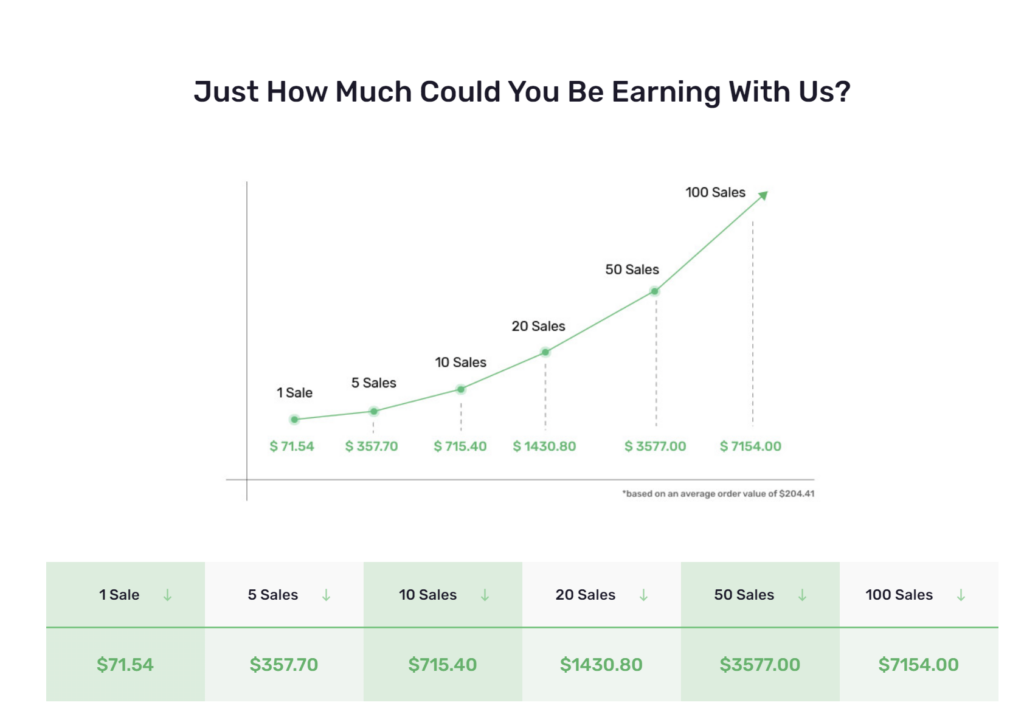
Sin embargo, también exige cierto grado de habilidad y esfuerzo para convertir visitantes en clientes de pago, so this could be more challenging for new affiliate marketers who haven’t yet built an established audience.
Another drawback to consider is conversion rates can be relatively low because it’s easier to get people to do something like check out a blog post or subscribe to an email list than it is to get them to pull out their credit card and make a purchase.
A pesar de estos retos, PPS es una de las formas más populares de ganar dinero como vendedor afiliado.
If you’re thinking about trying this model for yourself, you’re in luck. We found that close to 80% de los negocios en línea tienen algún tipo de programa de afiliación, por lo que existen muchas opciones, independientemente de su nicho.
Pago por cliente potencial (PPL)
Con el pago por contacto (PPL), los afiliados ganan generando clientes potenciales en lugar de ventas directas.
Quite simply, you get paid when a referred visitor takes a specific action on one of your partner’s websites, such as signing up for a newsletter, filling out a form, or registering for a free trial. It’s a popular choice for industries with longer sales cycles because it focuses on capturing interest and potential customers rather than immediate sales.
One noteworthy advantage of a PPL model is that it’s generally easier to generate leads than sales. People are often hesitant to make a purchase when they discover a website for the first time, but they are often more willing to inscribirse en una lista de correo electrónico.
La menor barrera de entrada significa que incluso los nuevos afiliados pueden empezar a ganar sin tener que dominar de inmediato complejas técnicas de venta.
However, there are some downsides to consider. Because generating a lead is typically easier than making a sale, the payouts per lead are usually lower compared to PPS. In other words, you’ll need a gran volumen de clientes potenciales para coger impulso y obtener ganancias sustanciales.
There are some cons to consider, but many companies find the PPL model highly effective and are willing to pay for quality leads, which means there’s a market for affiliates.
Sectores como las compañías de tarjetas de crédito y las aseguradoras utilizan con frecuencia este modelo, pues aprecian el valor de captar clientes potenciales que, con el tiempo, pueden convertirse en ventas.
Pago por clic (PPC)
El modelo de pago por clic (PPC) es otra forma que tienen los afiliados de ganar dinero cada vez que un visitante haga clic en un enlace de afiliado. Unlike the other two types of commissions we’ve discussed so far, the PPC model doesn’t require the visitor to do anything but click the link to the partner website.
PPC is widely used because it’s simple, easy to manage, and, in most cases, effective. It’s a powerful way for businesses to boost notoriedad de marcasobre todo si acaban de empezar.
Since you don’t need to convince visitors to buy anything or fill anything out, you can start earning commissions quickly. This commission type is particularly beneficial for nuevos afiliados que quizá aún no tengan las aptitudes o la experiencia necesarias para impulsar las ventas o generar clientes potenciales.
However, the PPC model also has its drawbacks. Commissions per click are typically low, even lower than PPC, which means you need an even larger volume of clicks to make decent earnings. There’s also a risk of attracting low-quality traffic that doesn’t convert into leads or sales for the advertiser, which might affect the longevity and long-term success of your affiliate partnerships.
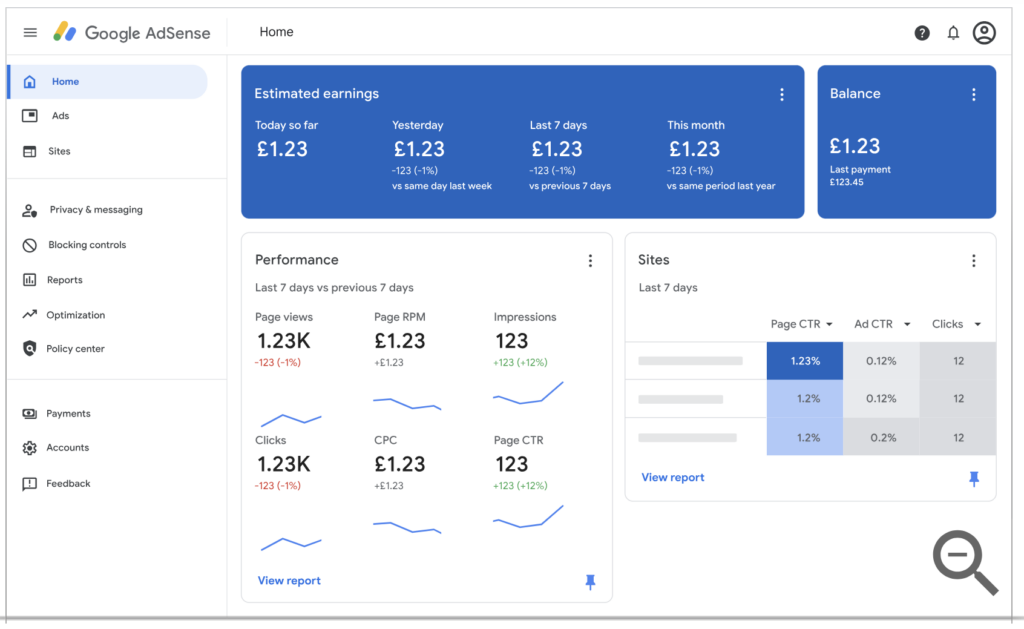
Google AdSense es la versión más conocida de PPC. Este programa permite a los afiliados monetizar el tráfico simplemente añadiendo bloques de anuncios a sus páginas web. Según nuestra experiencia, esto es especialmente lucrativo para los sitios que tienen mucho tráfico y participación.
Ultimately, PPC might not offer the highest payouts, but it’s still an attractive option for many affiliates because of its accessibility and availability.
Comisiones recurrentes
El modelo de Comisiones Recurrentes es una de las mejores formas de generar ingresos constantes. Como su nombre indica, recurrente significa que los afiliados ganan dinero mientras el cliente siga utilizando y pagando por un servicio.
La mayor ventaja también está relacionada con el nombre; a diferencia de los pagos únicos, las comisiones periódicas le permiten ganar dinero del mismo cliente una y otra vez.
You’ll see this model used most often with subscription-based products like software services (SaaS), sitios de afiliacióny otros servicios de pago regulares.
Los productos SaaS son especialmente atractivos porque a menudo ofrecen comisiones que oscilan entre los 1.000 y los 2.000 euros. 20% a 70%. Esto significa que cada vez que un cliente paga su cuota de suscripción, usted podría ganar entre el 20 y el 70% de lo que cuesta una licencia.
El alto potencial de ingresos, combinado con pagos regulares, puede convertir a cada cliente en una fuente de ingresos a largo plazo.
However, building a significant income with this model takes time. At first, your earnings might be small because it takes time to convince people to subscribe to a new product. It’s important to promote high-quality services that you use and trust because people can feel this authenticity and might be more likely to stick around.
Recurring commissions can be very rewarding if you’re patient and focus on building long-lasting relationships with your audience.
Comisiones escalonadas
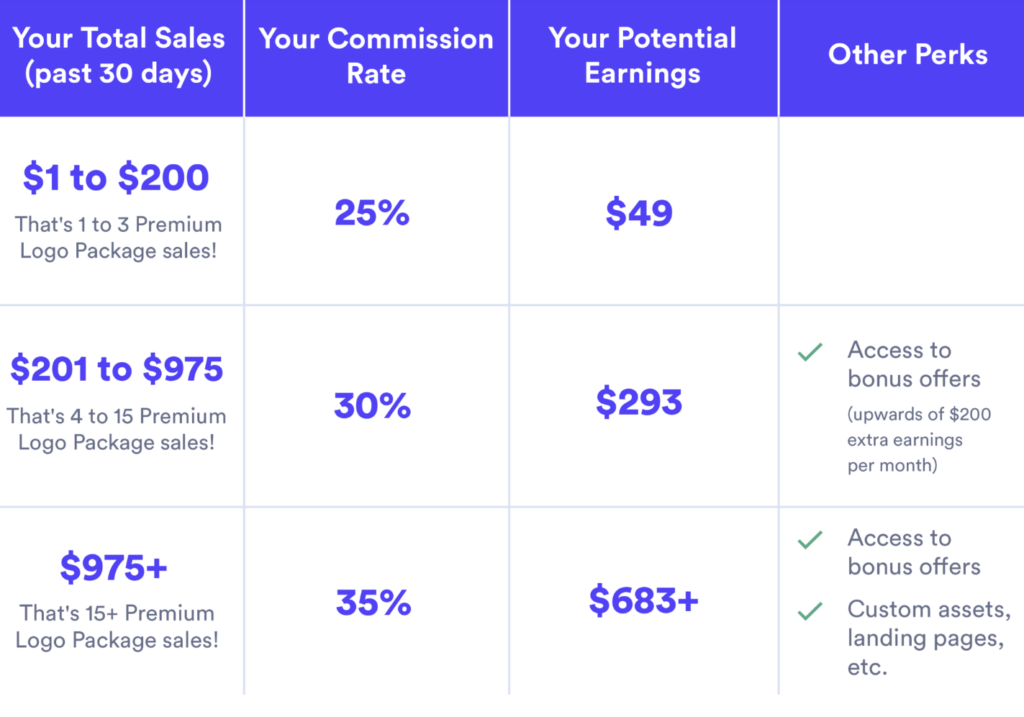
Un modelo de comisiones escalonadas está diseñado para recompensar a los afiliados por su rendimiento. En pocas palabras, su remuneración aumentará en función del número de ventas o clientes potenciales que convierta.
Here’s how it works: Let’s say you’re promoting a meal delivery subscription box. When you start, you make 10% on each box sold. After 50 boxes are sold, your rate goes up to 15%; then, after 200, your rate goes to 25%.
The rates and structure will vary based on your partners, but overall, it’s a very motivating and intriguing value proposition for affiliate marketers. Knowing that you can earn more by working harder can be a great boost.
However, there are challenges to consider. To reach the higher commission tiers, you often need to achieve a large volume of sales or leads. This can be difficult, especially for new marketers who don’t have a large audience or are working in a competitive niche.
You’ll have the best opportunity to thrive with this commission model if you’re patient, persistent, and know a lot about the service you want to promote because the more you sell, the higher your earning potential.
Programas de afiliación de dos niveles
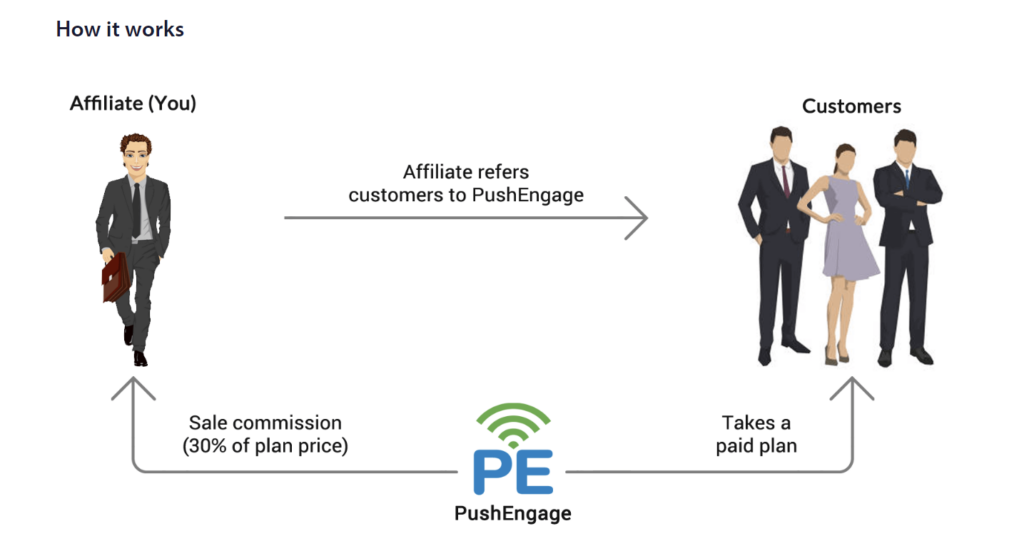
Now, let’s talk about the two-tier commission model. This program takes things a step further by allowing affiliates to earn commissions on their sales, as well as the sales of affiliates they recruit.
El socio afiliado puede crear una nueva fuente de ingresos acercándose a las personas de su círculo y convenciéndolas de que también pueden ganar dinero vendiendo el mismo producto o servicio.
En la mayoría de los casos, la tasa es inferior para las personas que incorporas. Podrías ganar 5% con tus ventas y 1% con las ventas de tus socios. Si dispones de la red necesaria, es una buena forma de diversificar tus ingresos al tiempo que consigues que otras personas se involucren en lo que haces.
Sin embargo, gestión de una asociación de marketing de afiliación de dos niveles puede ser todo un reto. Requiere buenas aptitudes de contratación y gestión. Tienes que ser capaz de atraer a otros afiliados y ayudarles a tener éxito, lo que puede añadir una capa de complejidad a tu trabajo.
You’ll also need to be careful because if you recruit too many people, you could shrink your own sales opportunities.
With these drawbacks in mind, I still believe this strategy can be effective. But it’s better suited for advanced affiliate marketers who are looking to try a second or even third revenue stream. You’ll want to wait on this if you’re just now getting into affiliate marketing.
Comisiones a tanto alzado
Flat-rate commissions offer a simple and predictable way for affiliates to earn money. In this model, affiliates earn a fixed commission amount for each sale or action, regardless of the sale’s value. This makes it easy to know exactly how much you will earn each time you drive a sale or lead.
One of the key benefits of flat-rate commissions is the simplicity and predictability they offer. You don’t have to worry about varying percentages or fluctuating earnings. Instead, you earn the same amount for each transaction, which makes it easy to understand your profits and return on investment.
Creemos que este enfoque directo puede ser muy atractivo, especialmente para los nuevos afiliados.
However, the flat-rate model does have its drawbacks. Since the commission amount is fixed, there’s no additional reward for higher-priced sales. Unlike percentage-based models, where you earn more for bigger sales, flat-rate commissions don’t provide extra incentives to push for higher-value transactions.
Las comisiones fijas suelen utilizarse para las cajas de suscripción y los negocios basados en servicios. Por ejemplo, una agencia de marketing puede ofrecer una comisión fija por cada cliente referido, independientemente de los servicios que adquiera. Esto facilita que los afiliados se centren en conseguir clientes potenciales constantes sin preocuparse por el valor de cada venta individual.
Despite the potential limitations, the Flat-Rate Commissions model can be very effective. It offers a clear and predictable earnings structure that is easy to understand and manage. It’s a great choice for people who want to do affiliate marketing without all of los complicados problemas matemáticos.
Consejos prácticos para elegir los modelos de comisiones de afiliación adecuados
Now that we’ve talked about a few different affiliate commission models, let’s go over a few quick tips to help you choose the best one(s) for your needs and goals.
- Considerar el nicho y los productos: En primer lugar, debe elegir modelos de comisión que se ajusten a los objetivos, las necesidades y los intereses de su empresa. público destinatario. Por ejemplo, alguien que retransmite videojuegos querría promocionar sillas de juego, tecnología informática, bebidas energéticas y otros productos que la mayoría de su audiencia incorporada adora o necesita.
- Evaluar el tráfico y el potencial de conversión: Analyze your website’s traffic and conversion rates. If your site has high traffic but low conversion rates, Pay-per-click (PPC) might be ideal. Conversely, if you excel at turning visitors into customers, models like Pay Per Sale (PPS) or Pay Per Lead (PPL) could be more profitable.
- Considere qué plataformas utilizará: Hay muchas formas de conectar con el público y convencerlo de que pruebe los productos que promociona. Se calcula que 79% de los afiliados utilizan blogs, mientras que 67% utilizan las redes sociales. Por lo tanto, pensar en qué plataformas utilizarás probablemente influirá en el modelo de comisiones que quieras seguir.
- Compromiso de tiempo y esfuerzo: Next, think about how much time and effort you can invest in your affiliate marketing. If you don’t have a lot of time, simple models like PPC are much more manageable. On the other hand, if you have a lot of time and effort to spare, higher reward models like PPS or recurring commissions might be more suitable.
- Analizar el potencial de beneficios a largo plazo: Debe pensar cuánto quiere ganar con el tiempo. Lo ideal sería que evaluación empresarialY piensa en modelos que ofrezcan ingresos recurrentes o residuales, ya que son un poco más sostenibles.
- Diversifique su cartera: Don’t rely on just one commission model. Diversifying your affiliate portfolio can minimize risks and maximize opportunities. Combining various models allows you to capitalize on different marketing strategies and revenue streams, enhancing overall profitability.
Comience hoy mismo su andadura en el marketing de afiliación
Ahí lo tiene. Cada modelo de comisión de afiliación tiene sus propios beneficios y desafíos, así que piensa detenidamente en tus objetivos y necesidades para que puedas averiguar qué es lo que mejor te funcionará.
Now that you understand the different affiliate commission models and how you can pick the best one for your needs, you’re ready to get out there and start building your affiliate marketing empire!
You’ll want to reach out to potential partners, start creating content, and streamline your process with Afiliados sedientos para que pueda ahorrar tiempo y proteger su duro trabajo.
Este artículo ha sido escrito por Syed Balkhies un experimentado empresario y fundador de WPBeginner, el mayor sitio de recursos gratuitos de WordPress.